Oral vs transdermal estrogen: what the route means for clot risk
A tablet and a patch can deliver the same hormone, estradiol, and yet carry a different blood-clot risk. The difference is not the hormone. It is the route it takes into your body. This page explains why, so a conversation with your clinician starts further along. It is information, not medical advice.
Reviewed August 2026 against NHS, NICE, British Menopause Society and Menopause Society references.
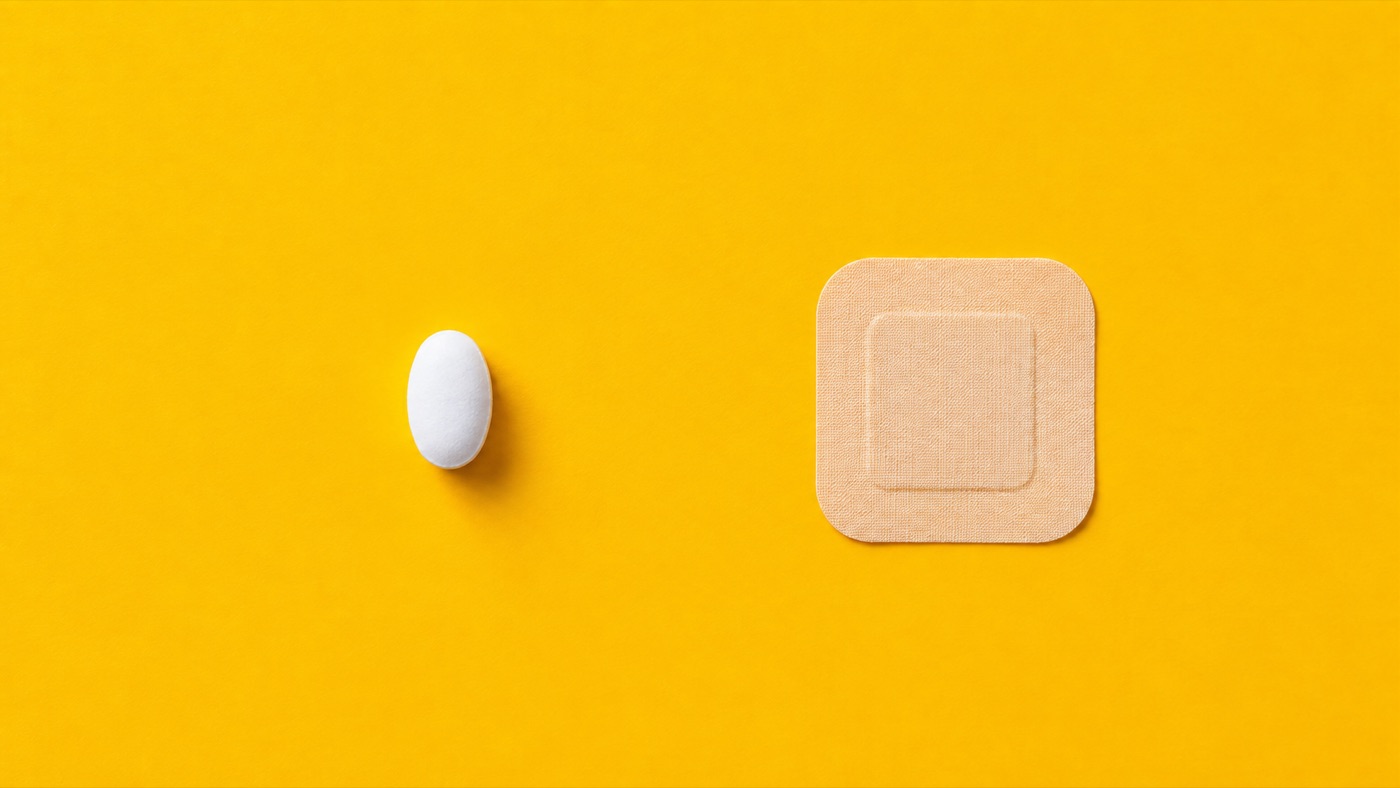
The short answer
Oral and transdermal estrogen usually contain the same hormone, estradiol. The difference is how it gets in. A tablet is swallowed and passes through the liver first, which raises the body's clotting factors and gives estrogen tablets a small increase in blood-clot risk. A patch, gel or spray is absorbed through the skin and largely skips that first liver pass, so at standard doses transdermal estrogen has not been shown to raise clot risk above background. That is why women with a higher baseline clot or stroke risk are often offered the transdermal route. For most women the absolute risk either way is low, and the right choice depends on your own history.
Same hormone, different door into the body
Most modern HRT uses estradiol whether it is a tablet, a patch, a gel or a spray. What changes between them is the path the hormone takes. A swallowed tablet is absorbed from the gut and travels straight to the liver before it reaches the rest of the body. That is called the first-pass effect. The liver, seeing a surge of estrogen, makes more of the proteins involved in clotting. Estrogen delivered through the skin behaves differently: it enters the bloodstream directly and largely bypasses that first liver pass, so it does not lift those clotting factors in the same way.
The two routes, side by side
| Route | How it's taken | First-pass liver effect | Clot risk (standard dose) | Often suited to |
|---|---|---|---|---|
| Oral | Tablets, swallowed daily | Passes through the liver first | A small increase versus non-users | Women without raised clot risk who prefer a tablet |
| Transdermal | Patch, gel or spray, absorbed through the skin | Largely bypasses the first liver pass | Not shown to raise risk above background at standard doses | Women with higher baseline clot or stroke risk, or who want to minimise it |
Simplified for comparison. Your own risk depends on far more than the route alone.
Why the liver is the whole story
It can feel surprising that swallowing a hormone versus wearing it on your skin changes anything about clotting. The reason sits entirely with the liver. Because a tablet is processed there first, in a concentrated hit, it nudges the liver into producing more clotting factors. The transdermal route trickles estrogen in through the skin and reaches the liver only at the same diluted level as the rest of the body, so that particular nudge does not happen. The hormone doing the work in your tissues is the same. It is the detour through the liver, present with tablets and largely absent with patches, that explains the difference in clot risk.
Who transdermal is usually for
Because of that favourable clot profile, guidelines often point women with a higher baseline risk toward the transdermal route. That can include a higher BMI, a personal or family history of blood clots, or migraine with aura, among other factors. It does not mean tablets are off the table for everyone else; plenty of women use oral estrogen safely. It means the route is one of the levers a clinician can pull to keep risk low, and it is often the simplest one. This is a decision made with your full history in front of you, not from a single feature on a page.
What this does not mean
It does not mean tablets are dangerous. For a woman without added clot risk factors, the absolute increase from oral estrogen is still small, and the tablet may suit her better for other reasons. It also does not mean the route is the only thing that matters. Age, weight, family and personal history, other medicines and the type of progestogen all feed into the picture, and they are weighed together. The route is a meaningful piece of the conversation, not the entire decision.
Common questions
- Is transdermal estrogen safer than tablets for blood clots?
- At standard doses, transdermal estrogen (patches, gels and sprays) has not been shown to raise the risk of blood clots, while estrogen tablets carry a small increase. The reason is that tablets pass through the liver first, which raises clotting factors, whereas estrogen absorbed through the skin largely skips that step. For many women the absolute risk either way is low, and the right choice depends on your personal history.
- Why does oral estrogen raise clot risk but patches don't?
- Swallowed estrogen is absorbed from the gut and passes through the liver before it reaches the rest of the body, the so-called first-pass effect. The liver responds by making more clotting factors. Estrogen delivered through the skin from a patch, gel or spray enters the bloodstream directly and largely bypasses that first liver pass, so it does not push clotting factors up in the same way.
- Who is usually offered transdermal estrogen?
- Guidelines often steer women with a higher baseline clot or stroke risk toward the transdermal route: for example a higher BMI, a personal or family history of blood clots, or migraine with aura. It is also a common first choice simply because of that favourable clot profile. Your clinician weighs it against your full history rather than applying a single rule.
- Does the type of progestogen matter for clot risk too?
- It can. Most women with a womb need a progestogen alongside estrogen, and micronized progesterone, which is body identical, is generally regarded as having a lower clot risk than some older synthetic progestogens. Clot risk is shaped by both parts of HRT plus your own risk factors, which is why the whole regimen is considered together rather than the estrogen alone.
- Is the clot risk from HRT large?
- For most women starting HRT the absolute increase is small, and with transdermal estrogen at standard doses the evidence does not show a rise above background risk. It is not the same for everyone, though. Risk climbs with age, weight, personal and family history and other conditions, so it is assessed individually rather than as one fixed number.
Keep going
The route is one fork. The next is the wider set of HRT forms, and the words on your prescription. Both have a guide next door.
Related reading
Sources
This article is for general information only and is not medical advice. Hormone therapy decisions, including the route and your individual clot risk, depend on your personal health history. Please talk to a qualified clinician about what is right for you.