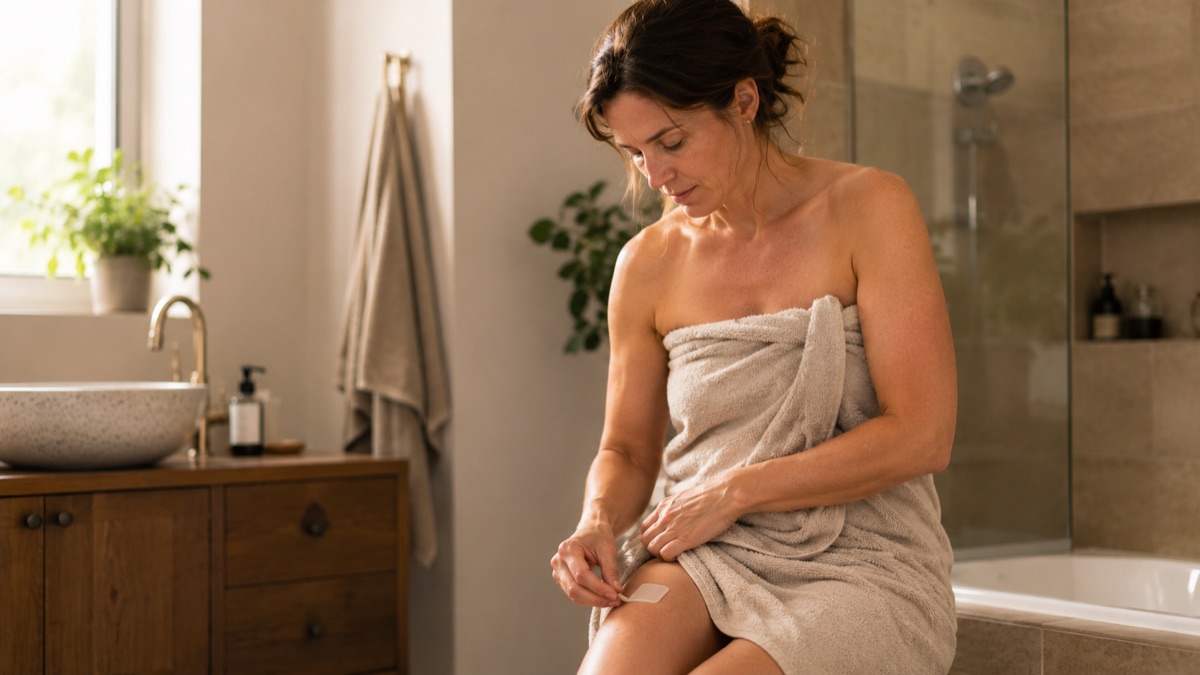
The short answer: there is no single best route, but for most women the transdermal options, the patch and the gel or spray, have a real safety edge over the oral tablet. Transdermal estrogen (oestrogen) is absorbed through the skin and skips the first pass through the liver, so it is not linked to the raised blood clot (VTE) risk that comes with swallowing estrogen. That is why guidelines now favour transdermal delivery, especially if you have any clot, migraine or higher-weight risk factors. Beyond safety, the choice is practical: how steady you want your dose, whether patches stick to your skin, whether daily gel fits your routine, and what is affordable and available where you live. If you still have a womb, you also need progesterone alongside whichever estrogen route you pick.
If you have been reading forums, you have seen the same frustrations come up again and again. Patches that peel off in the shower or slide down a sweaty thigh by day two. Gel that feels great for flexibility but comes in fiddly sachets and has to dry before you dress. Worry about tablets and clots. Questions about whether gel can rub off onto a partner or child. None of these are trivial. The route you can actually stick with, comfortably and safely, is the one that works. This guide walks through how the three compare so you can have a specific conversation rather than accepting whatever is handed to you.
What “transdermal” actually means, and why it matters
Transdermal means “through the skin”. Both the patch and the gel or spray deliver estradiol, the main form of estrogen used in body-identical hormone therapy, straight into your bloodstream through the skin. The tablet, by contrast, is swallowed and absorbed through the gut, which sends it first to the liver before it reaches the rest of the body. That single difference, the first-pass through the liver, drives most of the safety gap between the routes.
When estrogen passes through the liver in a concentrated dose, it nudges the liver into making more clotting factors. This is why oral estrogen carries a small but real increase in the risk of venous thromboembolism, a clot in the leg or lung. Transdermal estrogen bypasses that first liver pass, so the current evidence does not link it to the same raised clot risk. The British Menopause Society and NICE guideline NG23 both reflect this, noting that transdermal estrogen does not appear to increase VTE risk at standard doses. For a fuller picture of the overall safety debate, our guide on whether HRT is safe in 2026 sets out where the evidence stands now.
Why practitioners often reach for transdermal first
Because of that clot difference, transdermal estrogen is frequently the preferred starting route, and in some cases the clearly safer one. If you have a personal or family history of blood clots, transdermal is usually recommended over tablets. The same is true if you get migraine with aura, if you have a higher BMI, or if you have certain cardiovascular or liver considerations, all situations where the liver-related effects of oral estrogen matter more.
This does not make the tablet dangerous or wrong for everyone. For many women without those risk factors, an oral tablet is a reasonable, effective and often cheaper choice, and some prefer the certainty of swallowing one pill a day. The point is that the decision should be deliberate. If a tablet was prescribed without anyone checking your clot and migraine history, that is worth revisiting. Our broader explainer on what HRT involves covers how estrogen and progesterone fit together across all of these routes.
The three routes compared
Here is how the main delivery methods stack up on the factors women weigh when choosing. This is a guide to typical differences, not a prescription, and the right answer depends on your own history and preferences.
| Feature | Patch (transdermal) | Gel or spray (transdermal) | Tablet (oral) |
|---|---|---|---|
| Blood clot (VTE) risk | Not linked to raised risk | Not linked to raised risk | Small increase in risk |
| Dosing flexibility | Fixed strengths, changed 1 to 2 times a week | Very flexible, adjust pumps or sachets daily | Fixed strengths, one pill daily |
| Effort and routine | Low, set and forget for days | Higher, apply and let dry every day | Lowest, swallow and go |
| Common downsides | Peeling, skin irritation, visible outline | Fiddly to apply, transfer risk to others | First-pass liver effects, clot risk |
| Good fit if | You want steady levels and minimal fuss | You want fine dose control or react to adhesive | You have no clot or migraine risk factors |
Whichever column suits you, remember the same rule applies across all three: if you have a womb, you need progesterone as well, to protect the womb lining from estrogen given on its own.
Living with a patch: sticking, skin and steadiness
The patch’s biggest strength is that it delivers a steady dose with almost no daily effort. You apply it to the lower body, typically the buttock, hip or lower abdomen rather than the breast, and change it once or twice a week depending on the brand. Many women love not having to think about it every morning, and the steady release can suit anyone whose symptoms flare with hormone fluctuations.
The common complaint is that patches do not always stick, especially in heat, humidity or after exercise and swimming. Practical fixes that women pass around do help: apply to clean, dry, hair-free skin, press it firmly for a good ten seconds, warm it briefly with a hairdryer to activate the adhesive, and rotate the site to avoid irritation. Some cover a stubborn patch with a breathable film dressing. A minority get an itchy red reaction to the adhesive itself, and for them, the gel is often the better route.
Living with gel or spray: flexibility with a few catches
Gel and spray offer the most control over your dose. Because you can adjust the number of pumps, sprays or sachets, your practitioner can fine-tune the amount up or down in small steps, which is useful if you are sensitive to changes or still settling on the right level. It suits women who react to patch adhesive and those who like to feel in charge of their own titration.
The trade-offs are daily and small but real. You have to apply it every day, usually to the arms, shoulders or inner thighs, and wait for it to dry before dressing so it does not rub off on clothes. Sachets can feel fiddly compared with a pump. Some women report that a large volume of gel can be a lot to absorb, and a few notice digestive upset that resolves on a patch. There is also a transfer risk: skin-to-skin contact with a partner or child before the gel dries can pass estrogen to them, so wash your hands, let it dry fully, and keep the area covered for a while after applying.
What the tablet still offers
The oral tablet remains the simplest route to use. One pill a day, no adhesive, no drying time, no transfer worries, and it is often the cheapest and most widely stocked option, which matters a great deal in regions where patches and gels are expensive or hard to source. For a woman with no clot or migraine risk factors who values simplicity, it can be an entirely sensible choice, and The Menopause Society is clear that oral therapy is still a valid option for suitable candidates.
What the tablet cannot escape is the first-pass liver effect and the associated small clot risk. It can also raise levels of a protein that binds testosterone, which occasionally matters for libido, and it may be less suitable if you have gut absorption issues. Availability cuts both ways by region: across the GCC, parts of Southeast Asia, the UK and the US, oral estrogen is usually the most reliably stocked, whereas transdermal supply has faced shortages, so what is on the shelf may quietly shape your options.
Do not forget the progesterone question
Whichever estrogen route you choose, the need for progesterone depends on one thing: whether you still have your womb. If you do, estrogen on its own thickens the womb lining and raises the risk of endometrial cancer over time, so a progestogen is added to protect it, usually as micronised progesterone capsules or a hormonal coil. If you have had a hysterectomy, you generally take estrogen alone.
This is worth flagging because the estrogen route and the progesterone are separate decisions. You can pair a transdermal estrogen patch or gel with oral micronised progesterone, for example. Yellow exists to help you understand these combinations and prepare for the conversation, and you can start with our free symptom and treatment resources at spotyellow.com. The aim is that you walk into the appointment knowing what to ask, not being handed a default.
Frequently Asked Questions
Is the estrogen patch safer than tablets?
For blood clot risk, yes. The patch delivers estrogen through the skin and bypasses the liver, so it is not linked to the small increase in venous thromboembolism risk seen with oral tablets. NICE guideline NG23 and the British Menopause Society both favour transdermal routes for women with clot, migraine or higher-weight risk factors.
Why does my HRT patch keep falling off?
Patches struggle to stick in heat, humidity, or after sweating and swimming. Apply to clean, dry, hair-free skin on the lower body, press firmly for around ten seconds, and warm it briefly with a hairdryer to activate the adhesive. Rotating the site helps avoid irritation. If patches will not stay put, ask about switching to gel.
Can estrogen gel transfer to other people?
Yes, before it dries. Skin-to-skin contact with a partner or child soon after applying gel can pass a small amount of estrogen to them. Wash your hands after applying, let the gel dry fully, and keep the area covered for a while. Once dry, the transfer risk is minimal. This is not a concern with patches or tablets.
Which estrogen route gives the most flexible dosing?
Gel and spray. Because you adjust the number of pumps, sprays or sachets, your practitioner can fine-tune your dose up or down in small increments, which suits women who are sensitive to changes or still settling on a level. Patches come in fixed strengths, and tablets in fixed doses, so both offer less day-to-day flexibility.
Do I still need progesterone with a patch or gel?
If you have a womb, yes, whichever estrogen route you use. Estrogen given alone thickens the womb lining and raises endometrial cancer risk over time, so a progestogen, often micronised progesterone or a hormonal coil, is added to protect it. If you have had a hysterectomy, you generally take estrogen on its own.
Is oral estrogen ever the better choice?
It can be. For a woman with no clot or migraine risk factors who values simplicity, one pill a day with no adhesive, drying time or transfer worries is reasonable, and tablets are often cheaper and more reliably stocked. The Menopause Society regards oral therapy as valid for suitable candidates, though it carries the small clot risk transdermal routes avoid.
Further Reading
- The Menopause Society. Deciding about hormone therapy and delivery routes. https://menopause.org/patient-education/menopause-topics
- British Menopause Society. HRT preparations and transdermal estrogen. https://thebms.org.uk/publications/tools-for-clinicians/
- NICE. Menopause: diagnosis and management (NG23). https://www.nice.org.uk/guidance/ng23
- NHS. Types of HRT and how to take it. https://www.nhs.uk/conditions/hrt/types/
- Royal College of Obstetricians and Gynaecologists. HRT and venous thromboembolism risk. https://www.rcog.org.uk/for-the-public/browse-our-patient-information/
This article is for general information and does not constitute medical advice. It does not recommend for or against hormone therapy or any particular route. Individual risks and benefits vary, so decisions about estrogen delivery should be made with a qualified healthcare practitioner who knows your history.